At the till
The cashier offers a code or a QR code on the phone screen. One sentence is enough.
How to move customers, cards, groups and history from an old system to a new one without losses. Plastic stays an option: it can live next to the card in the phone.
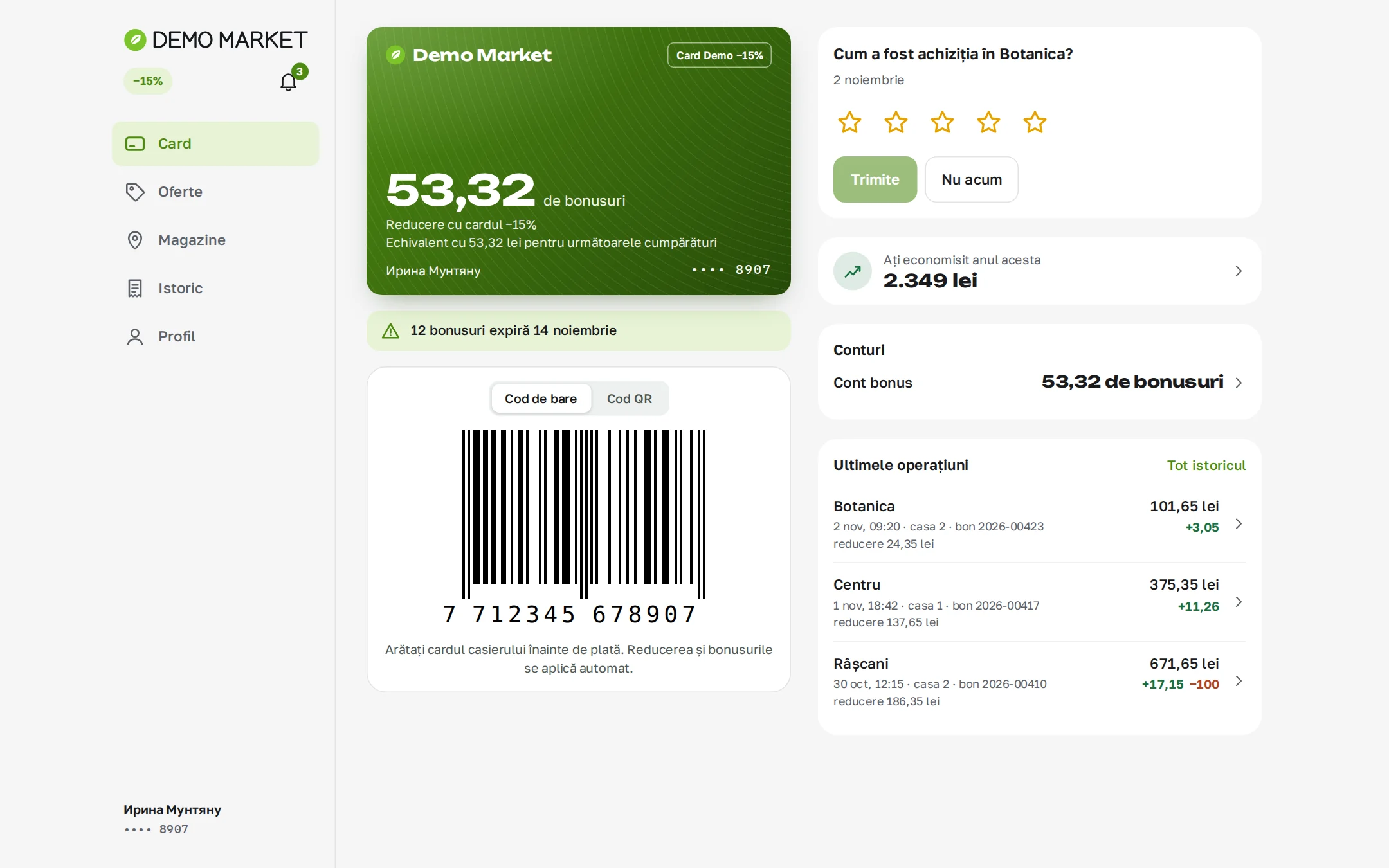
A store issues plastic loyalty cards for years, then notices that some customers lose them and others leave them at home. That is when the question of a digital loyalty card comes up. The main fear is always the same: a loyalty system migration will wipe out what has been accumulated. It does not have to: with careful preparation the customer notices only that the card is now always with them.
Plastic has clear strengths: it is familiar, needs no phone and works for people without a smartphone. The weaknesses are just as familiar: cards get lost, duplicated, issued in a hurry at the till, and little is known about the shopper.
A digital card adds what plastic cannot: offers in the phone, an e-receipt, the bonus balance, messages. But the move does not have to be abrupt. The calmest path is both cards working at the same time. A customer with plastic buys as before; a customer with a phone shows a code. Both numbers are attached to the same customer record.
Make the list before the work starts. A typical set:
| What we move | Why | What to check |
|---|---|---|
| Customers and card numbers | The card works from day one | Duplicates, missing phones, the same number for different people |
| Card groups and discounts | The discount percentage does not change | Groups match the new rules |
| Bonus balances and expiry dates | Customers do not lose what they earned | Total across all accounts before and after |
| Purchase history | Segments and analytics work | The period for which history is needed |
| Discount and promotion rules | The till calculates as before | Result on test receipts |
Decide separately what is not moved: customers inactive for ages, test records, rules nobody used. A migration is a good reason to clean up.
How many card types, groups and rules are really used. What has to be kept and what stopped working long ago.
Merge duplicates, fix phone numbers, close records with no owner. Clean data moves without surprises.
Load a copy of the data into the new system and compare: number of customers, bonus total, number of cards.
Take a set of real receipts from a past period and recalculate them in the new system. Review the differences: either a transfer error or an old rule that was not working exactly as intended.
One or two stores start first. Cashiers get used to it, and you see problems at a small scale.
When the check is clean, the other stores connect, and the old system stays available read-only.
In the first weeks follow the cashiers' complaints and customer requests: "card not found", "wrong bonuses". Analyze each case and fix the cause, not only the record.
Moving the data is half of the work. The other half is making the customer want to put the card in the phone.
The cashier offers a code or a QR code on the phone screen. One sentence is enough.
A QR code on the receipt and at the counter: scan, open, add to the home screen.
A small bonus for the first connection or the first sign-in to the app. Choose the size to fit your margin.
For those who do not want the app, plastic remains. Do not withdraw it too early: the point is for the digital option to be more convenient, not mandatory.
Every program has people who do not need a phone. Leave them plastic and do not make their terms worse: the discount on the card should equal that of a phone owner. If some cards lack data (no phone), do not block them; offer to complete the record at the next purchase.
A useful habit: once a month look at how many customers use the digital card and how many use plastic. You will see the real trend, not the cashiers' impression, and decide whether extra motivation is needed.
Three things matter to customers: the card keeps working, bonuses do not disappear, nothing has to be paid for or registered again. Say so briefly and in advance: at the till, in a message, on the store's website. Avoid technical words like "migration": "your card is now also in your phone" is enough.
Prepare a short note for cashiers with 5-6 questions: what to do if the card is not found, if the customer does not remember the phone number, if they have two cards. Usually exactly these questions come up in the first days. If you have several stores, name one responsible person in each who collects cashiers' questions and passes them to whoever leads the move. That way a problem found in one store does not repeat in the others.
More on the last point in the article on Law 195/2024.
In Synngate Loyalty, customers, cards, groups and rules are moved to the web center, and the calculation can be checked against the previous one. For chains whose loyalty runs in an ERP system, the path is described in the article on what to choose: ERP or web. The card in the phone opens from the browser and is added to the home screen without an app store: see the app page. Plastic cards keep working.
The order of work and timing are discussed during implementation; request a demo and we will go through your situation.
No. Existing card numbers are moved and plastic keeps working. The digital card is added as a second option.
Balances and expiry dates move with the customer. Before launch the totals are reconciled before and after.
It depends on the state of the data and the number of stores. Exact timing is given after the audit, not before.
Yes, that is the recommended path: running in parallel in one or two stores shows problems at a small scale.
A discount and a bonus look alike, but they affect margin, purchase frequency and the cashier's work differently. We compare them on one receipt and give a rule for choosing.
Read more →A step-by-step launch plan: from the goal and mechanics to cashier training and first measurements. No promised timelines: they depend on your chain.
Read more →R, F and M explained with a store example: how scores are calculated, who sits in the corners of the matrix and what to do with each group. The method is simple, but it has limits.
Read more →A 30-minute conversation about your loyalty program, with no generic slides.