More repeat purchases
Suits stores with frequent purchases: groceries, pharmacy, household goods, cafes.
A step-by-step launch plan: from the goal and mechanics to cashier training and first measurements. No promised timelines: they depend on your chain.
To launch a loyalty program in a store, you do not need to build a complex system on day one. You need a clear goal, two or three simple mechanics, trained cashiers and the habit of looking at the numbers. Below is the order that helps the owner of a retail loyalty program save time and keep customers.
What to prepare in advance Before choosing mechanics, gather the starting data. It saves weeks of debate:
A program without a goal turns into "cards for the sake of cards". Pick one main task for the first period:
Suits stores with frequent purchases: groceries, pharmacy, household goods, cafes.
Suits cases where customers come but buy little: add-on products, bundles, tiered discounts.
If you cannot see who buys and how often, the first goal is to collect data, with the customers' consent.
For each goal, decide in advance which indicator will tell you it worked: share of repeat purchases, average receipt, number of customers with a card.
Step 2. Choose the mechanics Start small: one basic benefit and one reason to come back. For example, a discount by card group and bonuses from the receipt. The difference is covered in the article discount or bonus. Add the rest once the basic scheme works.
Write the rules on one page: what is earned, which products are excluded, how bonuses are spent, when they expire. If a rule does not fit in three sentences, the customer will not remember it and the cashier will not be able to explain it.
There are three options, and they can be combined:
The app does not have to come from an app store: a web app opens in the browser and is added to the home screen. More in the article a loyalty app without an app store.
The program's success is largely decided at the till: if the cashier stays silent, the customer does not sign up. People rarely read posters, but they readily agree when asked briefly and to the point. Prepare:
Step 5. Data and consent A loyalty program collects personal data: a name, a phone or e-mail, purchase history. Think about it before launch, not after: - collect only what the program really needs; - obtain clear consent, and switch on promotional messages only with the customer's separate consent; - decide who in the store has access to the data and how a customer can request their data or its deletion; - check the legal requirements with a lawyer. General principles are in the article on law 195/2024 and loyalty.
If you have several outlets, start with one or two. You will see the cashiers' questions and the mistakes in the rules before they touch the whole chain. Timelines depend on the number of tills, the state of the data and the team's readiness, so it is more honest to agree on the order of work than on a date.
Run typical purchases and compare the earnings and discounts with what you expect.
Give cashiers time to get used to it and collect their comments.
Adjust the rules and wording, then widen the launch.
Announce the program: a poster at the till, a message, the cashier's line.
Step 7. Measure and adjust In the first month watch simple things: how many customers joined, how many receipts carry a card, how many bonuses were spent, how the average receipt changed for members. Record not only the numbers but also customers' questions: they show which rule is unclear. To understand what worked, part of your customers can be left without the new offer and compared with the rest.
After a few months you can move to finer work: split customers by purchase rhythm and find the ones who are starting to leave. That is what the articles on RFM and lifecycle segments are about.
Most failed launches share the same causes: - complicated rules that cannot be explained in a minute; - launching without cashier training; - no goal and no indicators; - terms that are too generous at the start and hard to withdraw later; - collecting data without clear customer consent.
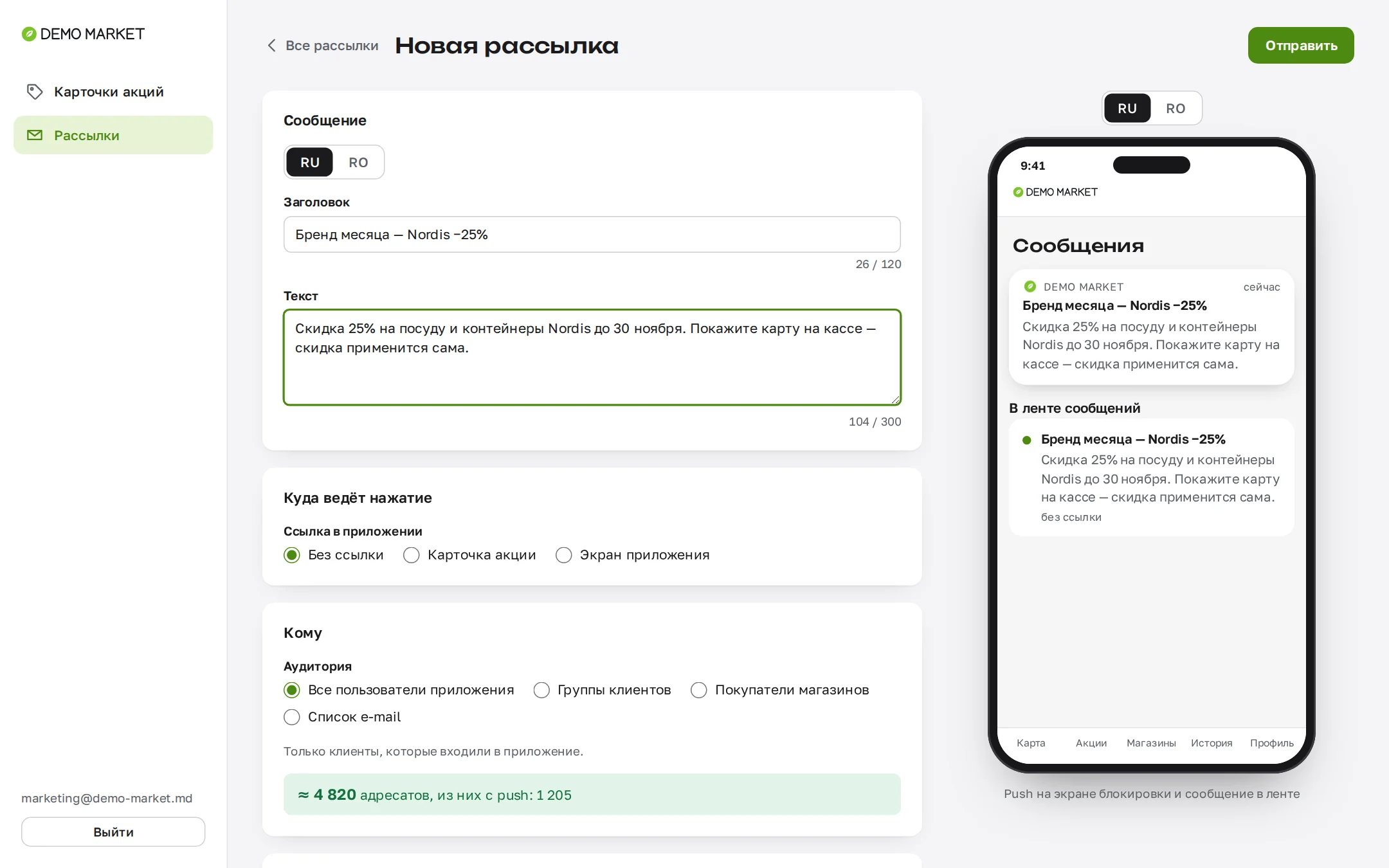
In Synngate Loyalty, the marketer sets up mechanics and offers in the cabinet, without programmers, and the customer's card lives in the app. We have our own till solution, and an open API is provided for other tills; the order of work is described in the implementation section. If you want to walk this path on your own data, request a demo.
With one goal and two mechanics. For one store a simple scheme that the cashier can explain in half a minute is best.
Not always. You need to check how the till identifies the customer and applies the rules. This is discussed at the audit stage.
The time depends on the number of stores, the state of the customer base and the team's readiness. An honest answer comes after the audit, not before.
Usually customers, cards, groups and bonus balances are moved, and the calculation is checked on real receipts. The details are agreed during implementation.
A discount and a bonus look alike, but they affect margin, purchase frequency and the cashier's work differently. We compare them on one receipt and give a rule for choosing.
Read more →R, F and M explained with a store example: how scores are calculated, who sits in the corners of the matrix and what to do with each group. The method is simple, but it has limits.
Read more →New, loyal, at risk, lost, reactivated: what each segment means, how the threshold is set and which action follows.
Read more →A 30-minute conversation about your loyalty program, with no generic slides.